
Anthropology Degree at CUNY Queens College: 4-Year Path
Explore the Anthropology, General Bachelor's degree at CUNY Queens College, a 4-year in-person program that builds cross-cultural skills and opens diverse career paths.

By Justin Thomas
For students drawn to the study of human cultures, societies, and biological evolution, the Anthropology, General Bachelor's degree, usually 4 years In-person at CUNY Queens College offers a rigorous and rewarding path. This program at Queens College, part of the City University of New York system, provides a comprehensive foundation in the four major subfields of anthropology: cultural anthropology, archaeology, biological anthropology, and linguistic anthropology. It is a degree designed for those who want to understand what makes humans unique, how societies function, and how the past informs the present.
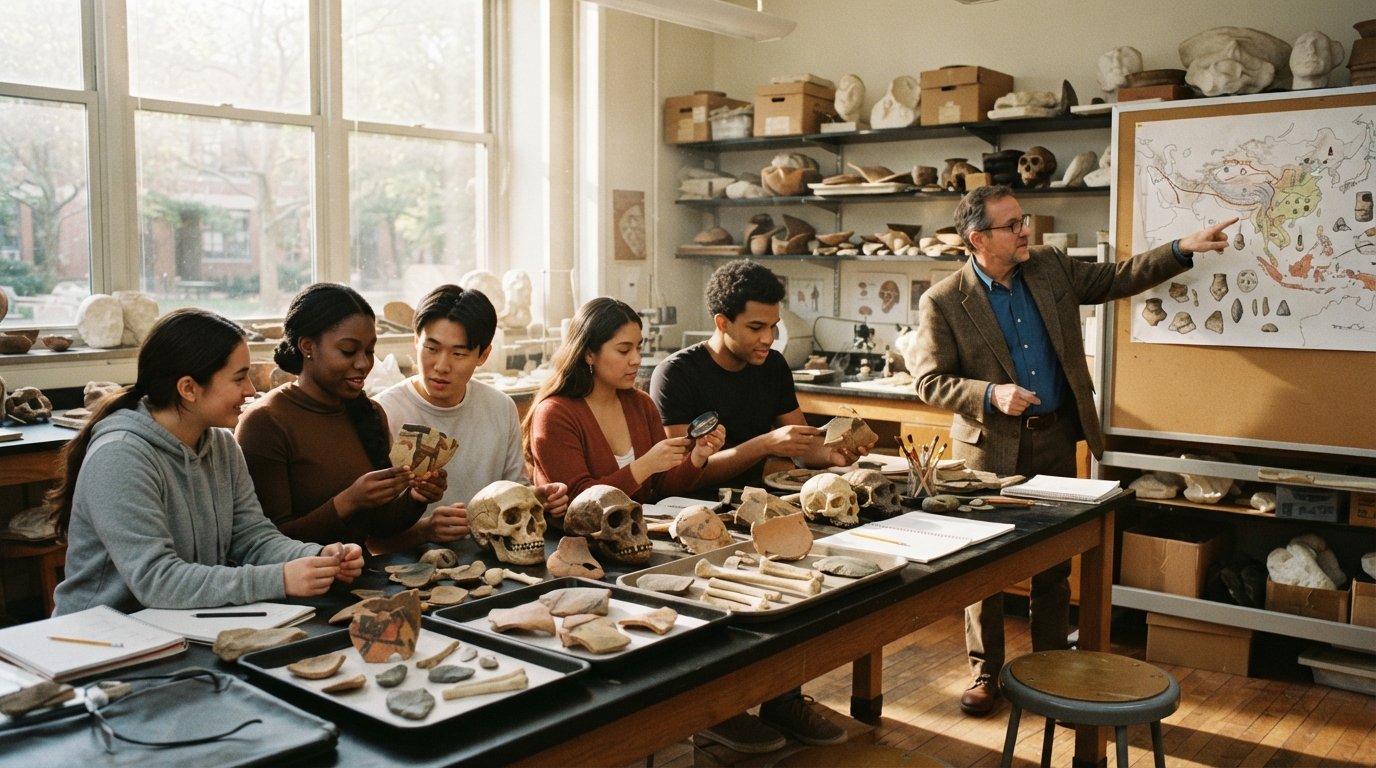
Choosing to pursue this degree in an in-person format is a deliberate decision. The value of face-to-face learning in anthropology cannot be overstated. It allows for direct engagement with faculty, hands-on experience with artifacts in laboratory settings, and the kind of spontaneous discussion that deepens understanding. At Queens College, students benefit from a vibrant campus community in Flushing, New York, which itself is a microcosm of global diversity, offering an invaluable living laboratory for anthropological observation.
Why Choose the Anthropology Major at Queens College?
The Anthropology, General Bachelor's degree program at CUNY Queens College is structured to give students both a broad overview and the opportunity to specialize. The curriculum is carefully designed to build critical thinking skills, cross-cultural awareness, and research competencies that are highly valued in a wide range of careers. Unlike some programs that focus narrowly on one subfield, the general track ensures you graduate with a holistic understanding of the human condition.
One of the standout features of studying anthropology at Queens College is its location. New York City is a global hub of cultural diversity, and the college itself is one of the most ethnically diverse campuses in the United States. This environment provides endless opportunities for ethnographic observation and community-based research. Students often find that their coursework comes alive as they see anthropological concepts playing out in the neighborhoods, markets, and institutions around them.
Moreover, the faculty in the Department of Anthropology are active researchers with expertise in areas ranging from Andean archaeology to urban anthropology, medical anthropology, and primate behavior. This means students have the chance to work alongside scholars who are contributing new knowledge to the field.
Core Curriculum and Subfield Exploration
Students in the Anthropology, General Bachelor's degree program at CUNY Queens College can expect to take a sequence of core courses that introduce the discipline's foundations. These typically include introductory courses in cultural anthropology, archaeology, and biological anthropology. From there, the program encourages exploration across all subfields, allowing students to tailor their upper-level coursework to their interests.
The curriculum is designed to be both broad and deep. You might find yourself taking a course on the anthropology of religion one semester, followed by a class on forensic anthropology the next. The goal is to develop a versatile skill set that includes qualitative research methods, ethnographic fieldwork techniques, and comparative analysis. This breadth is one of the greatest strengths of a general anthropology degree.
Biological Anthropology and Archaeology
Biological anthropology courses at Queens College cover topics like human evolution, primatology, and forensic anthropology. Students learn about the biological basis of human behavior and the evolutionary history that shaped our species. Archaeology courses, on the other hand, focus on the material remains of past societies. Students learn excavation techniques, artifact analysis, and how to build cultural chronologies.
Cultural and Linguistic Anthropology
Cultural anthropology is often the most popular entry point for students. It explores contemporary cultures and social structures, emphasizing participant observation and ethnography. Linguistic anthropology examines the relationship between language, culture, and thought. Together, these subfields offer powerful tools for analyzing social interaction and cultural meaning.
Skills You Will Develop in This Program
Pursuing an Anthropology, General Bachelor's degree, usually 4 years In-person at CUNY Queens College, equips you with a robust set of transferable skills. These go beyond just knowledge of human cultures. The program places a strong emphasis on developing your ability to write clearly, think critically, and analyze complex data from multiple perspectives. These are skills that employers across many sectors value immensely.
The research methods courses are particularly beneficial. You will learn how to design a research project, collect data through interviews and observation, and analyze your findings. This hands-on experience is excellent preparation for graduate school or for roles in market research, public policy, and community development. The ability to understand and interact with diverse groups of people is a skill that is increasingly essential in a globalized world.
Here are some of the key skills you will build during your four years:
- Cross-cultural communication and empathy
- Qualitative research methods, including ethnography and interviews
- Critical reading and analytical writing
- Data collection and basic statistical analysis
- Ethical reasoning and understanding of diverse worldviews
These skills are not just academic; they are practical tools for navigating a complex world. They enable you to understand different perspectives, solve problems creatively, and communicate effectively with people from all walks of life.
Career Opportunities with a General Anthropology Degree
A common question prospective students ask is, "What can I do with an anthropology degree?" The answer is quite broad. The Anthropology, General Bachelor's degree from CUNY Queens College opens doors to a variety of entry-level positions in fields such as social services, education, public health, and cultural resource management. It also provides a strong foundation for advanced study in anthropology, law, medicine, or business.
Many graduates find work as research assistants, program coordinators, or case managers in non-profit organizations and government agencies. Others go into the private sector, where their understanding of human behavior is valuable in marketing, user experience research, and human resources. The degree's emphasis on writing and critical thinking also makes it a solid preparation for careers in journalism or public relations.
For those considering graduate school, the general anthropology major is an excellent stepping stone. The research skills and theoretical grounding you gain will be essential for a master's or PhD program. Some students also choose to pursue professional degrees, such as a law degree (JD) or a Master's in Public Health (MPH), where the anthropological perspective is increasingly valued.
Admissions and Program Structure at Queens College
Admission to the Anthropology, General Bachelor's degree program at CUNY Queens College follows the general CUNY admission guidelines. As a four-year in-person program, it requires a full-time commitment, though some students may choose to attend part-time. The program is structured sequentially, with core introductory courses typically taken in the first two years, followed by more specialized upper-level electives in the junior and senior years.
Queens College is known for its academic rigor and its commitment to public education. The tuition is highly competitive, especially for in-state students, making it an excellent value for a quality education. The campus provides a supportive environment with resources like the Benjamin S. Rosenthal Library, academic advising, and a vibrant student life. The proximity to New York City also offers unparalleled internship opportunities with museums, cultural institutions, and social service agencies.
If you are comparing options, take the time to look at the specific course offerings and faculty interests within the department. Websites like TopStudents can help you explore how different programs align with your career and educational goals, providing a broader view of your options in the field of anthropology and related social sciences.
Making the Most of Your In-Person Experience
Since the program is in-person, you have a unique opportunity to build strong relationships with your professors and classmates. These connections can lead to research collaborations, letters of recommendation, and a professional network that lasts well beyond graduation. Take advantage of office hours and get involved in the Anthropology Club or other student organizations.
Queens College also encourages students to pursue fieldwork and research opportunities. Whether it is assisting a professor with a local archaeological dig or conducting an ethnographic study for a class project, these experiences are invaluable. They allow you to apply what you have learned in the classroom to real-world situations and can help you clarify your career path. The college's location in one of the most diverse urban areas in the world means that fieldwork opportunities are often just a train ride away.
Internships and Community Engagement
Many students enhance their degree by completing an internship. The college's career services office can help you find positions at museums, historical societies, public health organizations, and international NGOs. An internship not only provides practical experience but also helps you build a resume and make professional contacts. It is a proactive way to ensure you are prepared for the job market after you graduate.
Is This the Right Degree for You?
Choosing a major is a significant decision. The Anthropology, General Bachelor's degree at CUNY Queens College is an excellent fit for students who are curious about the world and passionate about understanding human diversity. It is ideal for those who enjoy reading, writing, and thinking deeply about social issues. If you are someone who likes to ask big questions about why we behave the way we do, this is the field for you.
However, it is also a program that requires self-direction. The degree is not a vocational training program; it is a liberal arts education. You will need to be proactive in seeking internships and connecting your academic learning to potential career paths. The skills you develop, such as cultural relativism and critical analysis, are powerful but sometimes need to be articulated to employers who may not be familiar with the discipline.
Overall, the Anthropology, General Bachelor's degree program at CUNY Queens College is a challenging and rewarding choice. It provides a world-class education in the heart of one of the world's most dynamic cities, preparing graduates for a wide range of careers and further study. By choosing this path, you are committing to a deep understanding of what it means to be human, and that is a valuable asset in any field.
In closing, this degree is more than just a set of courses. It is a framework for seeing the world with greater clarity and compassion. The four years you spend at Queens College in this program will equip you with the intellectual tools to analyze complex problems and the cultural awareness to work with people from all backgrounds. For the thoughtful and engaged student, it is a decision that can open doors for a lifetime of learning and meaningful work.