
Culinary Arts Associate Degree at DMACC: 2-Year Path
Kickstart your chef career with the 2-year Culinary Arts/Chef Training Associate's degree at DMACC, featuring hands-on kitchen training and externships.

By Stacy Harper
For anyone who has ever felt the pull of a busy kitchen, the sizzle of a hot pan, and the satisfaction of crafting a dish from scratch, a formal culinary education can transform passion into a thriving career. The Culinary Arts/Chef Training Associate's degree, usually 2 years In-person at Des Moines Area Community College (DMACC), offers exactly that transformation. This program is designed not just to teach recipes, but to build a complete foundation in kitchen science, management, and creativity. Whether you dream of running your own restaurant, leading a hotel kitchen, or becoming a personal chef, starting with a structured, hands-on associate degree gives you a significant advantage in a competitive field.
This guide explores everything you need to know about this specific program, from the curriculum and hands-on training to career outcomes and the unique benefits of studying at DMACC. We will look at why an in-person, two-year format is ideal for culinary arts, what you can expect from the coursework, and how to make the most of your time as a student. By the end, you will have a clear picture of whether this pathway aligns with your goals and how to take the next step toward a rewarding culinary career.
Why Choose an Associate Degree in Culinary Arts?
The culinary industry is vast, and the educational pathways into it are equally diverse. You might wonder why you should invest two years in an associate degree when you could start as a line cook and work your way up. While experience is invaluable, a formal degree provides a structured learning environment that accelerates your progress and fills gaps that on-the-job training often leaves open. An associate degree in culinary arts covers not only cooking techniques but also essential topics like food safety, nutrition, cost control, and menu planning, which are critical for advancement into management roles.
Moreover, the Culinary Arts/Chef Training Associate's degree, usually 2 years In-person at Des Moines Area Community College, is specifically designed to give you a comprehensive, immersive education. The in-person format means you are in the kitchen every day, working with professional equipment and under the guidance of experienced chef instructors. This is a stark contrast to online-only programs, which cannot replicate the tactile, sensory learning that is essential in culinary arts. The two-year timeline is also efficient, allowing you to enter the workforce relatively quickly while still gaining a deep and thorough skill set.
Inside the DMACC Culinary Arts Program
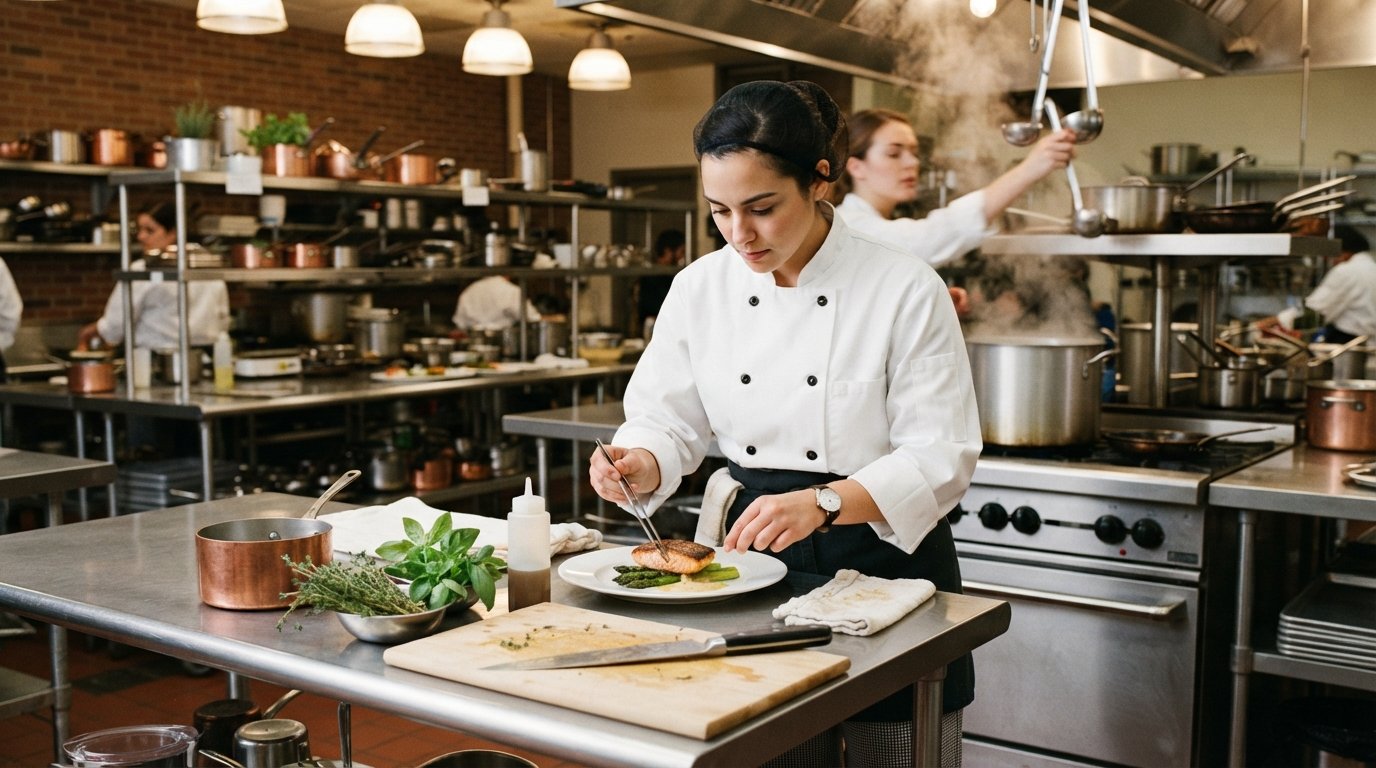
DMACC's culinary program is known for its rigorous, hands-on curriculum. It is structured to move you from foundational skills to advanced techniques over the course of four semesters. The program is housed in state-of-the-art kitchen facilities, which include separate labs for baking, garde manger, and hot food production. This setup ensures that you are not just learning theory but applying it daily in realistic kitchen environments.
Core Curriculum and Hands-On Training
The coursework is a blend of lecture-based learning and practical application. In the first year, you will focus on fundamental skills such as knife techniques, stock and sauce preparation, and basic cooking methods. You will also take classes in food safety and sanitation, which are non-negotiable in any professional kitchen. As you progress, the curriculum becomes more advanced, covering topics like global cuisines, advanced pastry arts, and beverage management. A significant portion of your time will be spent in lab hours, where you will cook for the college's public dining venues, giving you real-world experience in a controlled setting.
One of the standout features of the DMACC program is its emphasis on practical experience. You will not just be cooking for your instructors; you will be preparing meals for actual customers in the student-run restaurant and bakery. This is where you learn to work under pressure, manage your time, and produce consistent quality. The program also includes an externship component, where you will work in a professional kitchen outside of the college. This externship is often a stepping stone to your first job, as many students are hired by their externship sites upon graduation.
What You Will Learn: A Skill-Based Overview
The skills you acquire in this program go beyond just cooking. You will develop a professional palate, learn to plate dishes attractively, and understand the science behind ingredients and cooking methods. The program also places a strong emphasis on kitchen management, including inventory control, purchasing, and cost analysis. These business skills are crucial if you aspire to open your own establishment or move into an executive chef role.
Here are some of the key competencies you will master:
- Classical cooking techniques, from sautéing and roasting to braising and poaching.
- Baking and pastry fundamentals, including bread making, cake decorating, and dessert plating.
- Food safety and HACCP (Hazard Analysis and Critical Control Points) principles.
- Menu development and recipe costing.
- Kitchen leadership and team management.
These skills are not taught in isolation. Each course builds on the previous one, ensuring that you graduate with a cohesive and comprehensive understanding of the culinary profession. You will also have opportunities to participate in culinary competitions, which can be a great way to build your portfolio and network with industry professionals.
Career Paths and Salary Potential
Graduates of the Culinary Arts/Chef Training Associate's degree, usually 2 years In-person at Des Moines Area Community College, are prepared for a variety of roles in the food service industry. The most obvious path is to become a line cook or prep cook in a restaurant, but the opportunities are much broader. Many graduates go on to work in hotels, resorts, catering companies, country clubs, and even cruise ships. Others find roles in institutional settings like hospitals, schools, and corporate cafeterias, where the demand for skilled chefs is steady.
According to the U.S. Bureau of Labor Statistics, the median annual wage for chefs and head cooks was around $56,000 in 2023, with the top 10% earning over $90,000. However, your earning potential will depend on your location, the type of establishment, and your level of experience. Starting salaries for line cooks are often lower, but with an associate degree, you are positioned to move into supervisory roles more quickly. The management and financial skills you learn at DMACC can fast-track your promotion to sous chef, kitchen manager, or executive chef, which come with significantly higher pay.
The culinary industry is also known for its entrepreneurial opportunities. With the business knowledge gained in the program, some graduates choose to open their own food trucks, bakeries, or small restaurants. The program's emphasis on cost control and menu planning is especially valuable for aspiring business owners. Additionally, the externship and networking opportunities during your studies can lead to job offers before you even graduate, giving you a head start on your career.
The Value of In-Person Learning at DMACC
In today's digital age, many programs are moving online, but culinary arts is one field where in-person education remains essential. The kitchen is a place of sensory learning, where you need to see, smell, touch, and taste to truly understand. The in-person format at DMACC ensures that you get immediate feedback from your instructors and learn to work collaboratively with your peers in a real kitchen environment. This is something that cannot be replicated through a computer screen.
Furthermore, DMACC offers a supportive learning environment. Class sizes are kept small enough to allow for personalized attention, but large enough to simulate the dynamics of a busy kitchen. You will have access to professional-grade equipment and facilities, which is often not the case in smaller programs. The college also has strong ties to the local culinary community, providing guest chef demonstrations and networking events that enrich your education.
The two-year timeline is also a significant advantage. It is long enough to provide a deep, thorough education, but short enough that you can enter the workforce relatively quickly. Many students are able to work part-time in the industry while completing their degree, which allows them to earn money and gain experience simultaneously. This combination of formal education and practical work experience makes DMACC graduates highly attractive to employers.
How to Apply and What to Expect
Applying to the culinary arts program at DMACC is a straightforward process. You will need to complete the college's general admission application and then apply to the culinary arts program specifically. Because the program is popular, it is advisable to apply early. There may be a placement test or an interview as part of the application process, but this is typically not a barrier for most students. If you have a passion for cooking and a willingness to work hard, you are likely to be a good fit.
Once accepted, you will be required to purchase a set of culinary tools, including knives and uniforms. The program will provide a list of required items, and while there is an initial cost, this is an investment in your future. You should also be prepared for the physical demands of the job; being on your feet for long hours in a hot kitchen is part of the reality of culinary work. However, the rewards of creating delicious food and building a satisfying career are well worth the effort.
For those who are considering this path, it is also wise to explore all your options. The culinary field is diverse, and there are many different routes you can take. You might also look into other programs that focus on specific areas like baking and pastry or restaurant management. Visiting the DMACC campus, talking to current students and instructors, and even shadowing in a kitchen can give you a better sense of what to expect. This is a significant decision, and gathering as much information as possible is key to making the right choice.
Financing Your Education and Next Steps
Investing in your education is a major decision, and understanding the financial aspect is crucial. DMACC is known for being an affordable option compared to private culinary schools, but you should still plan ahead. Financial aid, scholarships, and work-study programs are available for eligible students. The college's financial aid office can help you explore all options, including federal grants and loans. Additionally, many local restaurants and culinary organizations offer scholarships specifically for students pursuing culinary degrees.
As you research programs, you might find it helpful to use resources like TopStudents to compare different educational opportunities. They provide a platform to explore various schools and programs, which can be a valuable tool in your decision-making process. While DMACC is an excellent choice for many, it is always wise to ensure it aligns with your personal and career goals.
If you are ready to take the next step, start by visiting the DMACC website to learn more about the application deadlines and requirements. You can also schedule a campus tour to see the facilities firsthand. Speaking with an academic advisor who specializes in the culinary arts program can also provide clarity on any questions you may have regarding curriculum, transfer options, or career services.
The journey to becoming a professional chef is both challenging and immensely rewarding. The Culinary Arts/Chef Training Associate's degree, usually 2 years In-person at Des Moines Area Community College, offers a structured, immersive pathway that equips you with the skills, knowledge, and experience to succeed. With a strong demand for skilled culinary professionals and the potential for a dynamic and creative career, this program is a solid investment in your future. Take the time to explore your options, visit the campus, and imagine yourself in the kitchen. Your culinary career starts with a single step, and this program might be the perfect place to begin.
In summary, the DMACC program is not just about learning to cook; it is about developing a professional identity. You will graduate with a portfolio of skills, a network of contacts, and the confidence to pursue your culinary dreams. Whether you see yourself in a Michelin-starred restaurant or running a cozy neighborhood bistro, the foundation you build at DMACC will serve you for years to come. So, if you are passionate about food and ready to work hard, this associate degree could be your recipe for success.