
Marine Maintenance and Ship Repair Technician Certificate at CLC
Launch a hands-on maritime career with the Marine Maintenance and Ship Repair Technician Certificate at Central Lakes College-Brainerd in under a year.

By Stacy Harper
The maritime industry is a silent powerhouse of global trade, yet it depends on a specialized workforce to keep vessels operational, safe, and efficient. For those drawn to hands-on mechanical work, troubleshooting complex systems, and the unique challenge of shipboard environments, the Marine Maintenance/Fitter and Ship Repair Technology/Technician Certificate, 12 weeks to less than 1 year In-person at Central Lakes College-Brainerd offers a direct and practical path into this high-demand field. This program is designed not just for recent high school graduates, but also for career changers and skilled tradespeople seeking to pivot into a sector with strong job security and clear advancement opportunities. It is a focused, immersive experience that transforms theoretical knowledge into applied skill, preparing graduates for immediate entry into shipyards, repair facilities, and marine service companies.
Unlike a traditional four-year degree, this certificate concentrates on the core competencies that employers actually seek. The curriculum is built around the daily realities of a marine fitter and repair technician, covering everything from diesel engine mechanics and hydraulic systems to welding, pipefitting, and precision measurement. Because the training is delivered in person at the Brainerd campus, students benefit from direct access to industry-standard tools and equipment, working under the guidance of instructors who bring years of practical experience. This hands-on approach is critical in a trade where safety and precision are non-negotiable, and it ensures that graduates are not just familiar with concepts, but are confident in their ability to perform the job from day one.
What Does a Marine Maintenance and Ship Repair Technician Do?
A marine maintenance and ship repair technician is the backbone of the maritime industry's operational readiness. These professionals are responsible for the installation, inspection, maintenance, and repair of the mechanical, hydraulic, and structural components of ships, boats, and offshore platforms. Their work spans a wide range of systems, including main propulsion engines, auxiliary power units, steering gears, deck machinery, piping systems, and hull structures. They are the problem solvers who ensure that vessels can safely navigate and perform their intended functions, whether that involves transporting cargo, conducting research, or supporting naval operations.
The role demands a unique blend of skills. A technician must be a competent mechanic, understanding the intricacies of diesel and gas turbine engines, but also a fabricator, capable of cutting, fitting, and welding metal components. They must be comfortable reading technical blueprints and diagrams, using precision tools like micrometers and calipers, and diagnosing electrical and hydraulic faults. The work is often physical and can be demanding, requiring stamina, dexterity, and a strong commitment to safety protocols. However, it is also intellectually rewarding, offering a new set of challenges with each vessel and each repair.
Key Responsibilities and Work Environments
The specific duties of a marine maintenance fitter can vary depending on the employer, which might include commercial shipyards, the U.S. Navy, offshore drilling companies, or inland waterway operators. However, some core responsibilities are consistent across the industry.
- Conducting routine inspections: Regularly checking engines, pumps, valves, and other equipment to identify wear, corrosion, or potential failures.
- Performing mechanical repairs: Disassembling, repairing, and reassembling engines, gearboxes, and other mechanical components, often in tight spaces.
- Fabricating and fitting parts: Using lathes, milling machines, and welding equipment to create or modify metal parts and structural elements.
- Maintaining piping systems: Installing, repairing, and testing pipes that carry fuel, water, hydraulic fluid, and other critical substances.
- Documenting work: Keeping detailed records of maintenance activities, parts used, and any issues discovered, which is vital for regulatory compliance and future planning.
Technicians work both in dry docks, where a vessel is brought out of the water for major repairs, and in the shipyard's workshops, where components are fabricated and overhauled. They may also work onboard ships during voyages, performing emergency repairs and routine maintenance. The environment is typically industrial, with exposure to noise, weather, and heavy machinery, but it is also highly structured and safety-conscious. For those who enjoy working with their hands and seeing tangible results from their efforts, this career offers substantial satisfaction.
Why Choose Central Lakes College-Brainerd?
Central Lakes College (CLC) has established a strong reputation for delivering career-focused technical education in Minnesota. The Brainerd campus, in particular, is home to a well-equipped marine maintenance program that leverages the region's connection to the maritime industry, including the Great Lakes and inland waterways. The program's design is a direct response to the industry's need for skilled technicians, with an advisory committee of local employers ensuring that the curriculum remains relevant to current technologies and practices. This connection to the industry is invaluable, as it not only shapes the training but also provides students with networking opportunities and a clear line of sight to potential employment.
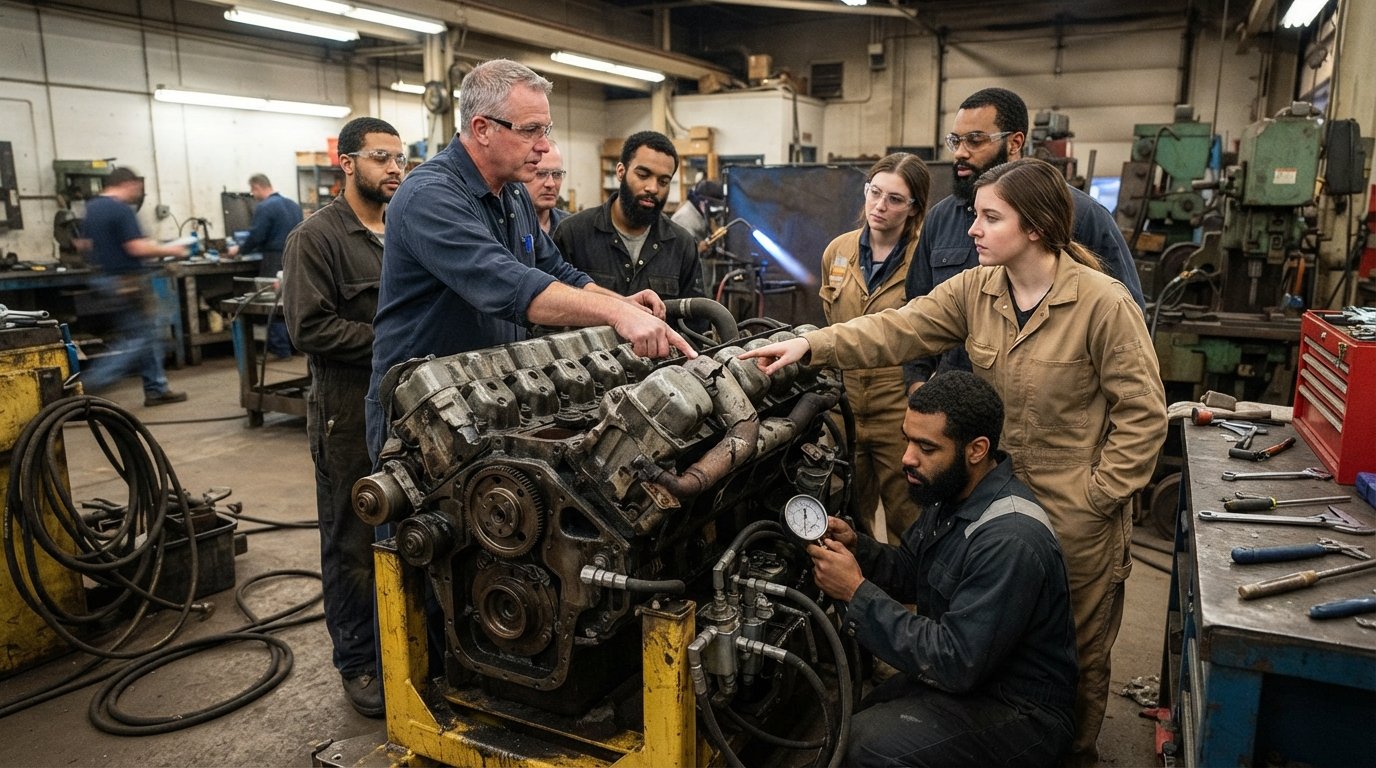
The 12 weeks to less than 1 year delivery format is a standout feature. It allows students to gain a comprehensive skill set and enter the workforce quickly, a significant advantage for those who need to start earning or who prefer an accelerated learning environment. The in-person requirement is not a limitation but a benefit; it ensures that you spend your time in the lab, not just in a lecture hall. You will work on actual marine engines, practice welding in a dedicated booth, and learn to use the same tools you will encounter on the job. This immersive, practical approach is the most effective way to master complex technical skills and build the confidence that employers look for.
Furthermore, CLC provides a supportive learning environment. Instructors are experienced professionals who are committed to student success, offering personalized attention in smaller class sizes. The college also offers student support services, including academic advising, tutoring, and career counseling, to help you navigate your educational journey. The campus itself offers a focused, community-oriented atmosphere, which can be particularly beneficial for adult learners and career changers who are looking for a seamless transition into a new field.
Curriculum and Skills You Will Master
The curriculum for the Marine Maintenance/Fitter and Ship Repair Technology Certificate is comprehensive and intensive. It is structured to build your knowledge from foundational principles to advanced applications, ensuring that you have a solid understanding of both the "why" and the "how" of marine systems. The program typically includes a mix of classroom instruction and a significant amount of lab time, where you apply what you have learned in a practical setting.
You will start with safety procedures and the proper use of hand and power tools, as these are the non-negotiable foundations of any trade. From there, you will delve into the specific systems you will be responsible for maintaining. Courses cover topics such as:
- Diesel Engine Theory and Repair: In-depth study of engine components, fuel systems, cooling systems, and diagnostic procedures.
- Marine Hydraulics and Pneumatics: Understanding how fluid power is used in steering, deck machinery, and other systems, including pump maintenance and cylinder repair.
- Welding and Fabrication: Practical training in MIG, TIG, and stick welding, focusing on ship repair applications and structural integrity.
- Blueprint Reading and Precision Measurement: Learning to interpret technical drawings and use micrometers, dial indicators, and other precision tools to ensure components meet specifications.
- Piping Systems and Valves: Installing and maintaining the complex network of pipes and valves that carry fluids throughout a vessel.
Throughout the program, you will work on real components and simulated repair scenarios that mirror industry conditions. For example, you might be tasked with diagnosing a fault in a marine engine, disassembling it, replacing worn parts, and reassembling it to manufacturer specifications. These exercises are designed to build your problem-solving abilities and your muscle memory for the tasks you will perform daily as a technician.
Certifications and Industry Credentials
While the certificate itself is a valuable credential, the program also helps you prepare for industry-recognized certifications that can enhance your employability. These may include certifications in specific types of equipment or safety protocols, such as OSHA safety training or specialized welding certifications. Earning these credentials demonstrates to employers that you have met a national standard of competency, which can be a deciding factor in a competitive job market. Your instructors will guide you on which certifications are most relevant to your career goals and how to pursue them.
Career Paths and Job Outlook
Graduates of the Marine Maintenance/Fitter and Ship Repair Technology Certificate program are prepared for entry-level positions such as marine mechanic, ship fitter, maintenance technician, or repair technician. The job outlook for these roles is generally positive, driven by the constant need to maintain and repair the global fleet of commercial and military vessels. As experienced technicians retire, new workers are needed to fill the gap, and the increasing complexity of shipboard technology means that skilled technicians are in high demand.
Employment opportunities exist in a variety of settings:
- Shipyards and dry docks: Working on vessels during construction, overhaul, or routine maintenance.
- Marine repair companies: Providing specialized repair services to a range of clients.
- Government and military: Maintaining naval vessels and coast guard assets.
- Offshore energy industry: Working on supply vessels, drilling rigs, and other offshore structures.
- Inland waterway operators: Maintaining barges, towboats, and other vessels that navigate rivers and lakes.
With experience, technicians can advance to supervisory roles, such as lead mechanic or maintenance supervisor, or specialize in a particular type of system, such as propulsion or electrical systems. Some choose to further their education with an associate's degree or additional certifications to open up even more opportunities. The skills you gain are also highly transferable, meaning you could potentially work in other industries that rely on diesel engines, hydraulics, and heavy machinery.
Financial Aid and Return on Investment
Investing in your education is a significant decision, and understanding the financial aspects is crucial. At Central Lakes College, a range of financial aid options is available to help make the program affordable. This includes federal grants, student loans, and state-based aid, as well as scholarships specifically for technical education students. The college's financial aid office can help you determine your eligibility and guide you through the application process.
The return on investment for this certificate is compelling. The program is short, which means you can enter the workforce quickly and start earning sooner. The starting salaries for marine maintenance technicians are competitive, and with the high demand, there is often potential for overtime pay. According to the U.S. Bureau of Labor Statistics, the median annual wage for bus and truck mechanics and diesel engine specialists, a closely related field, was over $50,000 in 2023, with top earners exceeding $75,000. Marine-specific roles can offer similar or higher compensation, particularly for those willing to travel or work in remote locations.
To see how this certificate compares to other fast-track training options, you might find it helpful to review our analysis of a similar program, the Ultrasound Technician Certificate at Bellevue College, which highlights the value of accelerated, skills-based education. The principle is the same: a focused, short-term investment can lead to a stable and rewarding career.
How to Apply and Next Steps
Taking the first step toward a new career is exciting, and the application process at Central Lakes College is straightforward. Prospective students must submit an application for admission, which is available online. You will also need to arrange for your high school transcript or GED scores to be sent to the college. While a background in mechanics is helpful, it is not a prerequisite for admission. The program is designed to take you from the basics to a professional level of competency.
Before starting the program, you will have the opportunity to meet with an academic advisor to discuss your career goals and ensure you are enrolled in the correct courses. If you are a veteran, you may be eligible for VA educational benefits, and the college has staff to help you navigate that process. For those coming from other trades, your previous experience may allow you to test out of certain introductory modules, accelerating your path even further.
In addition to the core certificate, you should explore the broader educational landscape. Many students use this certificate as a stepping stone to an Associate of Applied Science (AAS) degree, which can lead to higher-level positions and greater earning potential. The credits you earn in the certificate program often transfer directly into the AAS program, so you do not lose any time if you decide to continue your education later. For more in-depth information on maritime training and career options, you can also consult resources like TopStudents, which provides tools to connect with educational programs that match your goals.
The maritime industry is waiting for skilled professionals. The Marine Maintenance/Fitter and Ship Repair Technology/Technician Certificate, 12 weeks to less than 1 year In-person at Central Lakes College-Brainerd is your gateway to a career that offers stability, challenge, and the satisfaction of working on some of the most complex machines on earth. With a hands-on curriculum, industry-experienced instructors, and a fast track to employment, this program is a smart investment in your future. If you are ready to take the next step, contact Central Lakes College today to schedule a campus tour and talk with an advisor. Your future in ship repair starts now.