
Medical Assistant Certificate at Atlantic Technical College
Earn a Medical/Clinical Assistant Certificate in as little as 12 weeks at Atlantic Technical College, and start your healthcare career with hands-on training.

By Stacy Harper
If you are looking for a healthcare career that offers meaningful patient contact and steady demand, the Medical/Clinical Assistant Certificate, 12 weeks to less than 1 year In-person at Atlantic Technical College-Vs, may be your fastest route to a rewarding profession. This program is designed for individuals who want to enter the workforce quickly without spending years in school. By combining hands-on training with essential clinical skills, you can be ready for a role in a medical office, clinic, or hospital in less than a year. In this article, we will explore what this certificate entails, the skills you will gain, career prospects, and how to decide if this path fits your goals.
Why Choose a Medical Assistant Certificate?
Medical assistants are the backbone of many healthcare practices. They perform both administrative and clinical tasks, ensuring that medical facilities run smoothly. The demand for medical assistants is projected to grow much faster than the average for all occupations, according to the Bureau of Labor Statistics. This growth is driven by an aging population and the increasing need for preventive care. Earning a certificate in as little as 12 weeks can place you in a position to take advantage of this expansion.
Atlantic Technical College offers a program specifically tailored to meet this need. The Medical/Clinical Assistant Certificate, 12 weeks to less than 1 year In-person at Atlantic Technical College-Vs, is structured to provide comprehensive training in a compact timeframe. Whether you are a recent high school graduate or an adult looking to switch careers, this program offers a practical, focused curriculum that emphasizes real-world skills.
Program Structure and Duration
The program length, from 12 weeks to less than 1 year, accommodates different learning paces and schedules. Some students may prefer an accelerated 12-week intensive, while others might spread their coursework over several months to balance other commitments. The in-person format is a key advantage, as it allows you to practice procedures under the direct supervision of experienced instructors.
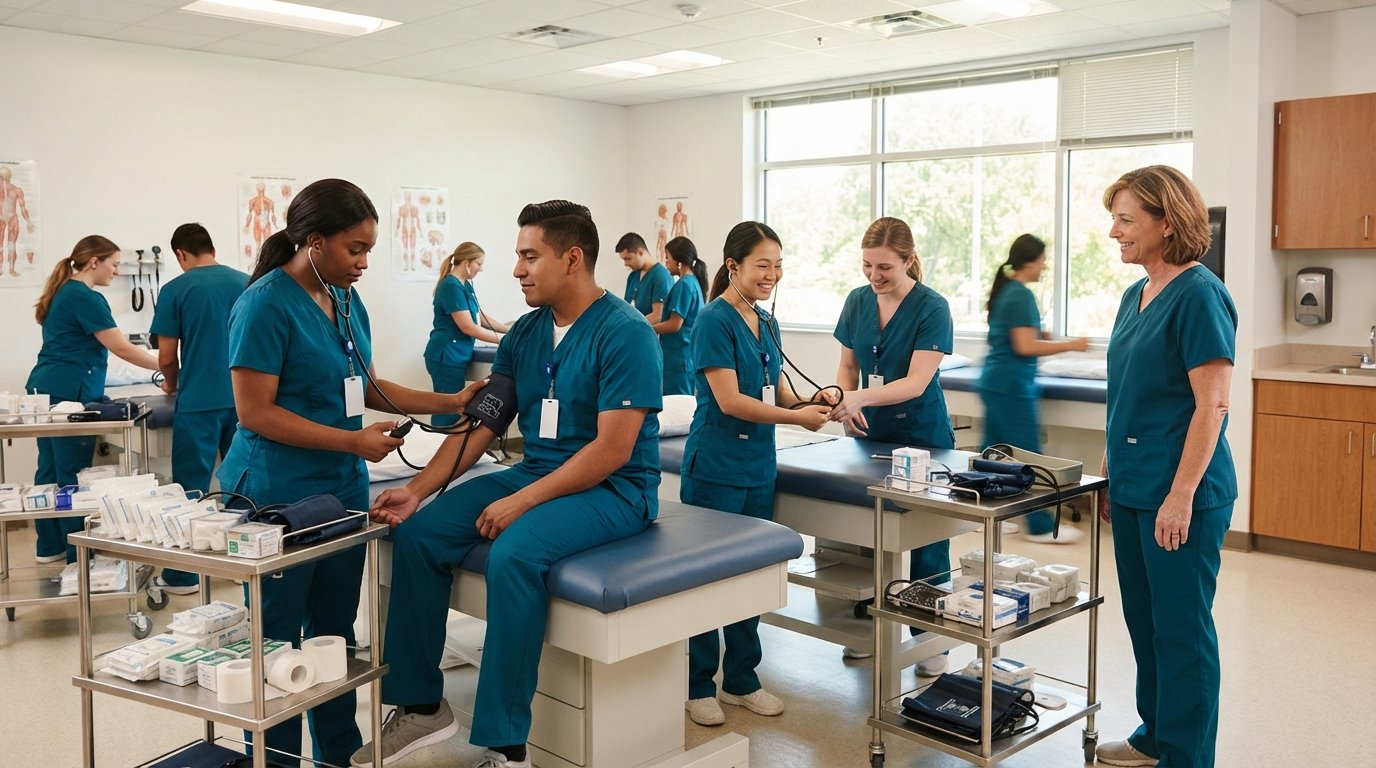
In a typical day, you might spend time in a classroom learning medical terminology, anatomy, and pharmacology, then move to a lab to practice taking vital signs, drawing blood, or administering electrocardiograms. This blend of theory and practice ensures you are not just memorizing facts but actually developing the muscle memory and confidence needed for a clinical setting.
Core Skills You Will Master
Graduates of the Medical/Clinical Assistant Certificate program are equipped to handle a variety of tasks. The curriculum is carefully designed to cover the most in-demand competencies for entry-level medical assistants.
Here are some of the critical skills you will acquire:
- Clinical procedures: taking patient histories, measuring vital signs, preparing examination rooms, and assisting physicians during exams.
- Phlebotomy and specimen collection: performing venipunctures, collecting urine and blood samples, and ensuring proper labeling and handling.
- Electrocardiography (EKG): preparing patients for EKGs, operating the equipment, and identifying basic arrhythmias.
- Administrative duties: scheduling appointments, managing medical records, coding for insurance billing, and handling patient communications.
- Patient preparation: explaining procedures to patients, ensuring their comfort, and maintaining a sterile environment.
Beyond these technical skills, you will also develop soft skills essential for patient care, such as empathy, communication, and professionalism. These are often the traits that set exceptional medical assistants apart and lead to positive feedback from patients and employers alike. The in-person training at Atlantic Technical College emphasizes these interpersonal aspects through role-playing and direct patient interaction in simulated environments.
Career Opportunities and Advancement
With a Medical/Clinical Assistant Certificate, you are not limited to a single job title. Graduates often find employment in physicians' offices, outpatient care centers, hospitals, and specialty clinics. The versatility of this certification means you can work in pediatrics, geriatrics, cardiology, or many other specialties, depending on your interests.
Many medical assistants start in a general practice to build experience and then specialize as they discover their passion. Some pursue additional certifications, such as the Certified Medical Assistant (CMA) credential, which can increase earning potential and job mobility. Others use this certificate as a stepping stone to further education in nursing, healthcare administration, or other allied health fields.
For those who want to get a sense of other fast-track healthcare options, our guide on fast-track career paths in healthcare provides comparable insights. It is always wise to compare programs to find the one that best fits your career goals and lifestyle.
Admission Requirements and Prerequisites
Before you apply, it is important to understand the prerequisites for the Medical/Clinical Assistant Certificate, 12 weeks to less than 1 year In-person at Atlantic Technical College-Vs. Typically, applicants must have a high school diploma or GED. Some programs also require a basic math and English proficiency test, or successful completion of prerequisite courses such as Medical Terminology.
Additionally, because you will be working with patients, you may need to provide proof of immunizations, pass a background check, and have a current CPR certification. Atlantic Technical College's admissions office can provide the most accurate and up-to-date requirements. It is a good idea to contact them early to ensure you have all necessary documents ready for the application cycle.
Financing your education is also a key consideration. While the program is affordable, you should explore financial aid options, scholarships, and payment plans. Many students also qualify for federal student aid, so filling out the FAFSA is a critical step. The return on investment for this certificate is strong, as you can begin earning a competitive salary in a short time after graduation.
What to Expect in the Classroom and Lab
The in-person experience at Atlantic Technical College is immersive. Classes are kept small to allow for individualized attention. You will not be just a number in a lecture hall; you will be a participant in your own learning journey. Instructors often have years of real-world experience and bring case studies from their own practice to illustrate concepts.
In the lab, you will practice on medical mannequins and sometimes on fellow students under supervision. This hands-on practice is invaluable. You will learn how to use an otoscope, a sphygmomanometer, and other standard instruments. You will also practice electronic health records (EHR) software, which is now standard in most medical offices. By the end of the program, you will have performed a minimum number of clinical procedures, ensuring you meet the competency requirements expected by employers.
Furthermore, the program often includes an externship component, where you spend time in a real healthcare facility. This externship is a chance to apply your skills in a live environment, build professional references, and potentially secure a job offer before you even graduate. It is a bridge between classroom learning and the professional world.
Cost and Financial Aid Considerations
Tuition for the program is competitive, but the total cost includes fees for textbooks, lab supplies, uniforms, and certification exams. To give you an idea, here are some typical expenses you might encounter:
- Tuition: varies by credit hour, but the total is often less than $5,000 for the full program.
- Textbooks and online resources: approximately $500 to $1,000.
- Uniforms and lab equipment: around $200 to $300.
- Certification exam fee: $100 to $150 for the CCMA or RMA exam.
- Background check and immunizations: variable, usually under $200.
Many students are surprised to find that the total investment is lower than they expected, especially when compared to a two-year associate degree. Moreover, the short duration means you can start earning sooner, which offsets the cost. The college's financial aid office can help you navigate options such as payment plans, scholarships for healthcare students, and grants that do not need to be repaid.
Is This Program Right for You?
This certificate is ideal for individuals who are compassionate, detail-oriented, and comfortable in a fast-paced environment. If you enjoy interacting with people and have an interest in science and medicine, this career could be very fulfilling. The program is also a great fit for those who want to test the waters of healthcare without committing to a long and expensive degree.
However, it is not for everyone. Medical assisting can be physically demanding, requiring long periods of standing, lifting patients, and handling stressful situations. You must be prepared for the emotional aspects of patient care, including dealing with illness and sometimes death. The program is rigorous, and the accelerated pace means you need to stay organized and committed to your studies.
Weighing these factors will help you decide if the Medical/Clinical Assistant Certificate, 12 weeks to less than 1 year In-person at Atlantic Technical College-Vs, matches your personal strengths and career aspirations. Speaking with an academic advisor and, if possible, shadowing a medical assistant for a day can provide invaluable insight.
Next Steps: How to Apply
If you are ready to take the leap, the application process is straightforward. Start by visiting the Atlantic Technical College website to find the program page and application deadlines. You will typically need to fill out an online application, submit your high school transcripts, and possibly complete a placement test.
Because the program is in high demand, it is wise to apply early. Some cohorts fill up quickly, and there may be a waitlist. Once you are accepted, you will receive information about orientation, class schedules, and any preparatory work you need to complete before the first day.
In the meantime, you can begin familiarizing yourself with medical terminology and basic anatomy. Many free online resources can give you a head start. Also, consider joining professional organizations for medical assistants, which offer networking opportunities and access to continuing education resources.
Your Future in Healthcare Starts Here
Choosing to pursue a Medical/Clinical Assistant Certificate is a decisive step toward a stable and rewarding career. The program at Atlantic Technical College offers a blend of speed, affordability, and practical training that is hard to match. With the healthcare industry continuing to expand, the skills you acquire will be in high demand for years to come.
The certificate you earn is not just a piece of paper; it is a testament to your dedication and readiness to make a difference in patients' lives. Whether you choose to work in a small family practice or a bustling hospital, you will have the knowledge and confidence to perform your duties with excellence. If you are ready to start this journey, the staff at Atlantic Technical College are there to guide you. Also, for a broader look at training options across the country, you can explore various programs on TopStudents, a college matching site that can connect you with schools that fit your goals.
Take the next step today. Your career in healthcare is waiting, and with a certificate that takes less than a year to earn, you can be working in a field that makes a real difference. Seize the opportunity to build a career that offers both personal satisfaction and professional stability. The future of healthcare needs skilled professionals like you.